Showing posts with label spring in the garden. Show all posts

Sunday, May 1, 2011

my heart's in the garden


Bleeding Hearts ~ Dicentra spectabillis
(Thanks to SkeletalMess for use of his textures)
 
It seemed as though spring was a long time coming this year.  The excessive rains and clouded skies obscured those feelings of "it's just around the corner".  Finally, all those fancy tulips I had planted in pots throughout the yard in the fall made it obvious.  Spring was going to pop with or without sunlight and gentle skies!!


The tulips seemed intent on upstaging all other happenings in the yard, however the ever dependable Daffodils were bright flashes of white and yellow in the background.


King Alfred


Measuring les than 1 inch across, the faces of these little miniature daffodils (above and to the left) were a sweet addition to the show.


Not to be outdone, the Iceland Poppies had been waiting to release their dancing petals; and that they did, in brillant reds, yellows and whites. 


The opening act of the Bleeding Hearts always leaves me breathless.  As its show continues, I love to view the chorus line of delicate pink hearts swaying gently in the wind.


The tulip show continues with new vatieties opening all the time. 


Thanks to Pareeerica for use of texture 'Paper Frame'


Freecias and the sweet faces of Pansies have stepped up to Spring and joined the parade of color.


When the tulips forget to close back up in the evening I know that their show has just about come to an end.  The intricate design of the center, previously hidden within its folds, now lies open for all to see. 


The sweet pink slippers of the Western Redbud stand sentinel as the first wave of Spring color comes to an end.  Soon, other flowers will replace them in an on-going show.  The tulips and their companions will be missed, however, as there's nothing as warming to the heart as the first signs of Spring.


May there be magic in your garden throughout the seasons!

Friday, April 15, 2011

on magic wings ~ the jewels of my garden

© All Rights Reserved

Hummingbirds


I don't recall exactly when these flying jewels captured my heart.  I remember many times, watching in awe, as they would hover over a flower, sipping nectar, or chase a rival out of their feeding territory.  The sound of those magic wings was the lure and eventually I put up one feeder, then two around the yard.   As the number of feeders grew, so did my desire to capture the hummingbirds in flight.  Their population around the yard during spring and fall migration have given me ample opportunity to witness their activity through my lens.  (Click on any picture to view larger)


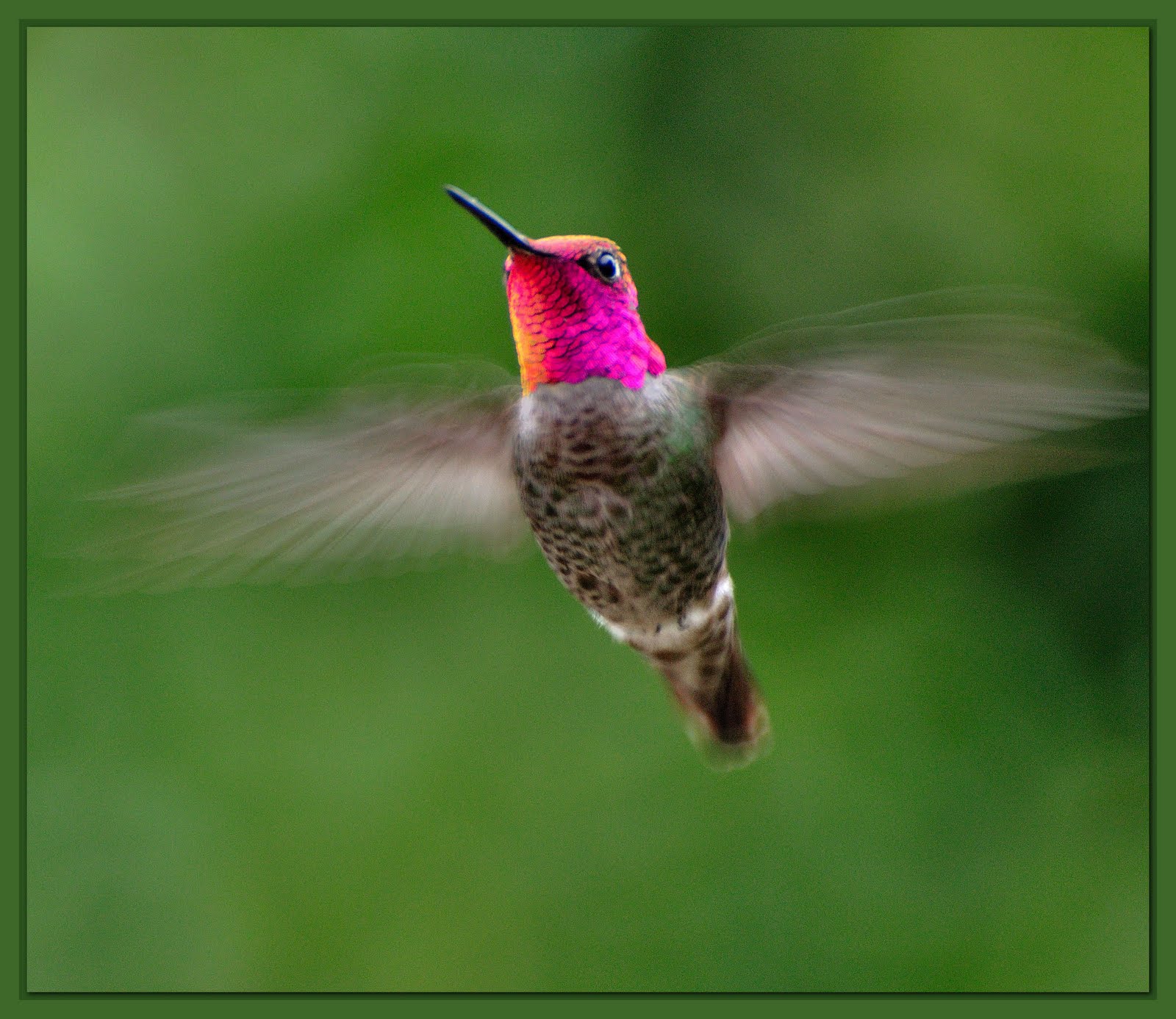
male Anna's Hummingbird ~ Calypte anna
 If you've ever witnessed the boisterous behavior of Hummingbirds, it's hard to imagine the tenacity of a bird with an average weight of less than an ounce and overall measurement of only 3" to 4".  


female Anna's Hummingbird ~ Calypte anna


Hummingbirds in flight are a truly magical thing.  They have the distinct ability to fly forward, backward, and even upside down briefly.  They can also hover in place.  The bones in Hummingbirds are permanently fixed except at the shoulder where they can move in all directions.  While they hover, the wings move in a figure 8 pattern.  The wings can beat upwards of 80 plus times per second depending on the species.


Immature male Anna's Hummingbird ~ Calypte anna


female Rufous Hummingbird ~ Selasphorus rufus

female Anna's Hummingbird ~ Calypte anna

Female Rufous Hummingbird ~ Selasphorus rufus


Due to their high metabolism, Hummingbirds need to refurbish their energy supply frequently, generally at the rate of about once every 10 minutes.  Flower nectar is one of their primary sources of refueling.


Sugar water feeders also offer a source of enegy. The color red on a feeder is a particular lure for the Hummingbird and helps them identify a feeding source from a distance. 

Sugar water supplements should be mixed at the rate of 1 part sugar to 4 parts water.  Feeders should be cleaned and changed once a week to make sure that the mixture does not spoil.

Hummingbirds also feed on small insects such as aphid which satisfy the need for protein in their diet.

female Rufous Hummingbird ~ Selasphorus rufus

male Calliope Hummingbird ~ Stellula calliope


Nothing stands out as brightly in the garden as the flash of iridescent color on the throat and heads of the male Hummingbirds.  While the Anna's has a fully colored gorget (throat) and head, the Rufous has coloration only on the gorget.  The Black Chin has an iridescent collar around his neck which reflects a beautiful lavender purple in the sunlight.  The small Calliope has purple streaking (called a beard) of iridescence on his throat.


male Anna's Hummingbird ~ Calypte anna

male Rufous Hummingbird ~ Selasphorus rufus

male Black Chin Hummingbird ~ Archilochus alexandri

male Calliope Hummingbird ~ Stellula calliope

This will be the first in a series of blogs on these little powerhouses.  Until next time, may you be blessed with the presence of magic wings whereever you are.


© All Rights Reserved on contents and photos contained in this blog